Choosing the right bathroom exhaust fan is rarely as simple as picking the cheapest model or the one with the highest airflow rating. If you ignore motor quality, bearing choices, materials, construction, and the fit between fan model and market requirements1, you may face warranty complaints, noisy returns, or even costly compliance failures.
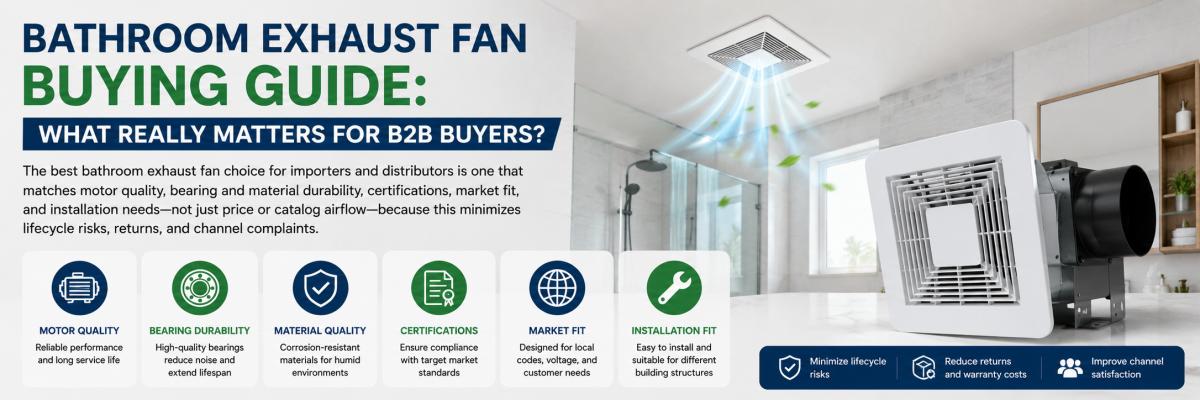
The best bathroom exhaust fan choice for importers and distributors is one that matches motor quality, bearing and material durability, certifications, market fit, and installation needs—not just price or catalog airflow—because this minimizes lifecycle risks, returns, and channel complaints.
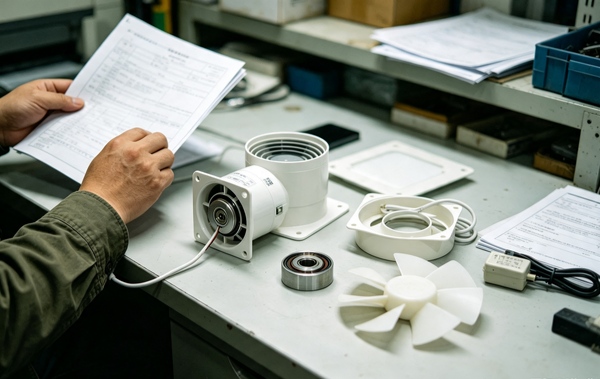
Many buyers ask about price and CFM first, but I often see that problems downstream come from overlooking build quality and market compatibility at the sourcing stage. Here’s what decades of manufacturing and B2B feedback have taught me to look for—read on if you want fewer headaches after the sale.
Why Not Just Choose the Cheapest Bathroom Exhaust Fan?
It’s tempting to focus on low cost per unit, especially in highly competitive markets. But “cheap” can mean high risk down the line—especially if critical elements like motor, bearings, or material thickness are compromised.
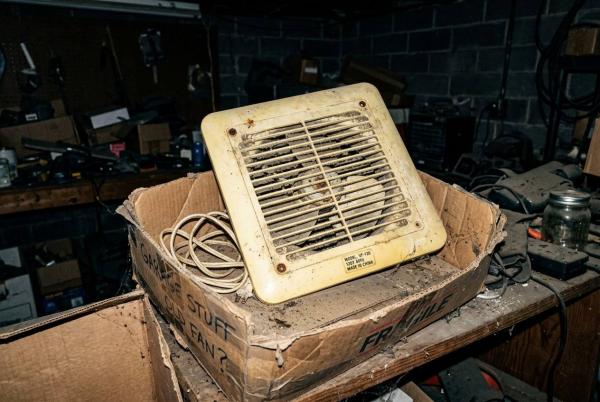
Cheap bathroom exhaust fans may save you up front, but can create higher rates of noise complaints, short service life, or batch returns due to weak motors, noisy bearings, or poor materials.2
The Real Cost Behind “Cheap”
Think of a bathroom exhaust fan as a system with many weak links:
- Thin casing plastics: Prone to vibration, yellowing, cracks, or sagging
- Low-grade bearings: Often create rattling or grinding noise over time
- Simple shaded-pole motors: Can overheat, lose torque, or wear out faster
- Loose assembly/QC: Increases risk of startup faults and shipping damage
When I hear from importers who tried rock-bottom SKUs, typical results include an uptick in distributor complaints, negative online reviews, and higher warranty costs. Some even lose access to project and retail channels that now require documented reliability.
Balancing Price and Lifecycle Value
Instead, resilient product specialists look for models that:
- Use confirmed ball or copper bearing motors, not the cheapest alternatives
- Specify ABS or flame-retardant plastics, especially in Europe or the Middle East
- Guarantee production consistency with systemized quality control
- Allow adjustment of motor, cable, plug, or packaging to fit target requirements
Paying modestly more up front can reduce case-to-case support, shipment issues, and labor wasted on warranty replacements.
How Should Bathroom Exhaust Fan Airflow Be Evaluated?
Many buyers treat airflow (CFM or m³/h) as the dominant selection metric, but ventilation performance isn’t just about catalog values. In practice, installation factors and system resistance greatly affect results3.
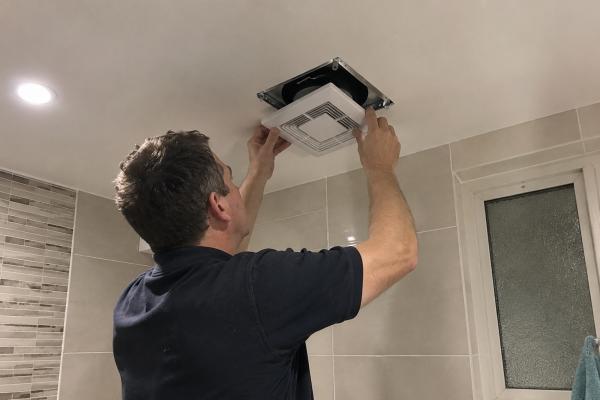
Bathroom exhaust fan airflow must be matched to bathroom size, expected installation (wall/ceiling/duct), duct length, and outlet/resistance settings; catalog airflow means little if installation reduces real ventilation below requirement.
Why Catalog Airflow Ratings are Only a Starting Point
“100 m³/h is enough, right?” Not always. Here’s what I’ve seen repeatedly:
- Wall/Window Mount: Direct outside exhaust, airflow close to spec
- Ducted Ceiling Mount: Each meter of duct, plus bends or small outlets, adds substantial back pressure4
- Long or Narrow Ducts: Real delivered airflow can drop by 30% or more5
Some buyers select based on nominal CFM alone (“200 m³/h covers most rooms!”) but report poor vapor clearance or slow odor removal—especially in older apartments with long duct runs.
How to Match Airflow to Real Conditions
A true B2B sourcing conversation should include:
- Bathroom Volume: Is it a compact toilet or a large shower room (m² or ft²)?
- Mounting Method: Wall, ceiling, window, or duct mount?
- Typical Duct Lengths: Any bends, reductions, or damper types?
- Required Change Rate: Some markets specify a minimum air change per hour6
It’s wise to confirm with your channel or project owner what real airflow target is expected, and if possible, request a model with a backed-up static pressure test curve. It’s not just a number—practical installation eats a huge margin.
Which Market-Specific Requirements Should Buyers Consider?
There’s no one-size-fits-all in bathroom exhaust fan sourcing—your market’s safety, packaging, and compliance requirements can be as decisive as the product’s mechanics.
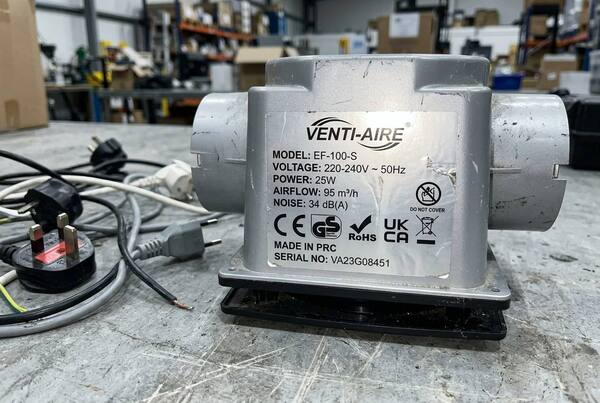
Every bathroom exhaust fan order should specify target market details—certification, voltage, plug, packaging, documentation, and channel expectations—to ensure import compliance, smooth sales, and minimal complaint risk.
Certification and Electrical Standard Pitfalls
Many first-time importers overlook electrical and documentation mismatches. Common feedback we clarify with buyers includes:
- Certifications: Different markets require IEC CB, CE, ETL, SAA, GCC, or HVI—never assume universal acceptance7
- Voltage/Frequency: (e.g., 220-240V/50Hz, 110-127V/60Hz), affects motor spec and warranty coverage
- Plug and Cord: Region-specific plug designs (BS, Schuko, NEMA, etc.)
- Packaging/Marking: Local language labeling, barcode, and carton size needs for channel supply
For projects or tenders, having the wrong test report or cord can mean refused shipments or end-user rejections.
Avoiding Costly Supply Chain Mishaps
I always recommend sending your detailed market “checklist” with every inquiry:
| Item | Examples | Market-Dependent? |
|---|---|---|
| Certification | CE/CB/ETL/SAA/RoHS/GCC/HVI | Yes |
| Voltage/Frequency | 220V 50Hz, 127V 60Hz, etc. | Yes |
| Plug Type | Schuko, BS, NEMA, etc. | Yes |
| Packaging Marking | Language, barcode, channel box | Yes |
| Outlet Size/Shape | Duct diameter, position | Yes |
Even for the “same” model series, the wrong setup can turn a successful product in one country into a support headache elsewhere.
How Do Motor Quality, Bearings, and Materials Affect Fan Durability?
Durability isn’t random—it’s engineered from the inside out. Sourcing teams who deeply understand motor types, bearing specs, and material grades avoid the majority of after-sale complaints.
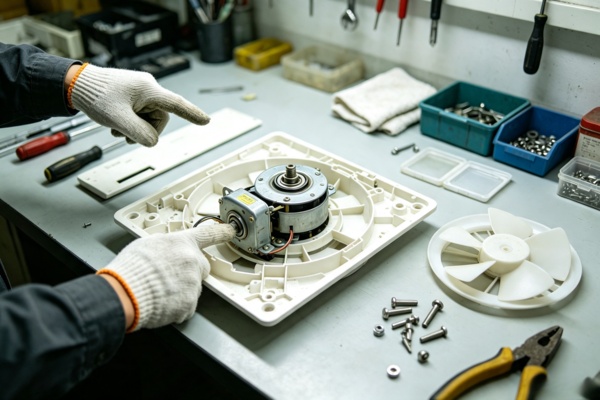
Bathroom exhaust fan durability depends on proven motor quality, proper bearing selection, and high-integrity materials; models with inferior components are more likely to cause noise, mechanical failure, or warranty disputes.
The Real Impact of Components
- Motor Type: Ball bearing motors generally last longer and work more quietly in high humidity than cheap sleeve-bearing “shaded pole” motors.8
- Bearing Selection: Copper, double ball, or sealed bearings tolerate moisture, dust, and long run times better.
- Fan Blade & Case Material: ABS plastics or flame-retardant grades resist warping and yellowing; thin, recycled plastics may crack or deform in hot bathrooms.9
From production experience, when buyers specify a minimum bearing or casing standard, warranty call rates and distributor complaints drop dramatically compared to “lowest offer wins” orders.
Questions to Clarify with Your Supplier
- What motor/bearing configuration is standard for this model?
- Does the supplier offer a life test or internal QC report?
- What exact plastic resin/grade is specified?
- Are there batch-to-batch consistency controls (QC, full-traceability, production records)?
- Is post-sale support or warranty arrangement clear?
By raising these topics up front, you avoid brands' and distributors’ most common frustration: “Why does noise or failure spike after six months in the field?”
What Key Questions Should B2B Buyers Ask Before Finalizing a Model?
The best way to prevent issues is to ask the right pre-sales questions, based on B2B realities—not just what looks good in a photo or on a cheap pro forma invoice.
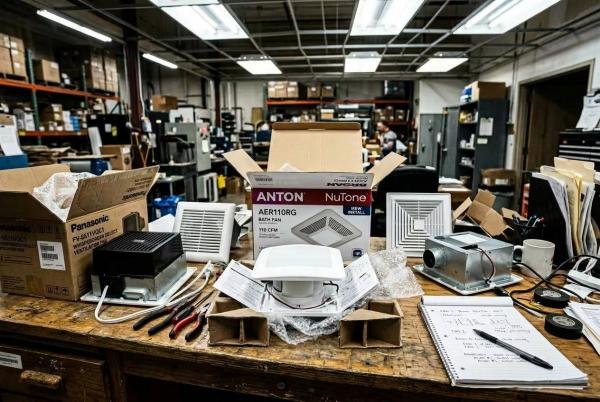
B2B bathroom exhaust fan buyers should clarify target market, certification, electrical standard, installation needs, price band, service life and noise expectations, and warranty support—before choosing a model configuration.
Most Common, Most Critical Buying Questions
- What is the exact destination market?
- Which certifications, voltage, and plug are required?
- Will installation be wall, ceiling, duct, or window mount?
- Is there a minimum acceptable airflow, noise, or expected service life?
- What’s your tolerance for post-sale support or return rates?
- Do carton or product markings need channel or barcode compatibility?
By running through this list, you can work with manufacturers like us to select or customize a model that matches—not just hope the standard catalog works everywhere.
Why This List Reduces Risk
In our factory’s experience, importers who engage on all these points at the start:
- Get the right motor and bearing option for climate/use profile
- Receive products that pass import inspection the first time
- Avoid batch rework due to plug or carton errors
- Run into fewer compliance issues during customs or resale
- Miss costly “hidden extras” or after-sale disputes because all non-negotiables are clear
Even if you have been sourcing for years, changing market rules (like GCC in the Middle East, or barcode rules for e-commerce) mean it’s never “plug and play” every season.
Frequently Asked Questions
What airflow rating should I choose for a bathroom exhaust fan?
Select airflow based on bathroom size, installation method, and duct layout—not just catalog CFM or m³/h. For ducted or ceiling mounts, allow for losses due to system resistance. Always confirm local building code ventilation requirements for projects.
Can the same bathroom exhaust fan model be used everywhere?
No. Electrical standards, plug types, certifications, and packaging vary widely by country and sales channel. Always confirm and specify market requirements before ordering—even minor non-compliance (like the wrong cord) can cause import or channel problems.
How can I reduce noise complaints from bathroom exhaust fans?
Choose fans with high-quality ball bearing motors and thicker casing materials. Inferior bearings and thin plastics amplify noise over time, especially in humid environments. Ensuring solid wall or ceiling installation also prevents rattling.
What warranty or after-sale support matters most for channel buyers?
Durable motor, robust bearings, and certified safety are key to minimizing claims and support headaches. Clarify expected warranty, service procedures, and local support structure before committing to a model.
Conclusion
To succeed as a B2B buyer, bathroom exhaust fan selection should focus on quality and market fit before price alone. Pin down your required motor quality, bearings, materials, and ensure every model matches local certification, voltage, and installation standards. By using this checklist with your manufacturer, you dramatically reduce lifecycle complaints, batch returns, and costly support. Ready to choose products designed for durable, compliant, and profitable supply? Let’s talk about your project needs with ANTONFANS today.
"Program Requirements for Residential Ventilating Fans ...", https://www.energystar.gov/sites/default/files/2024-04/ENERGY%20STAR%20Ventilating%20Fans%20Version%204.2%20Specification%20Rev%20Apr%202024.pdf. Institutional guidance on residential ventilation fans treats certified performance, electrical safety, construction, and installation conditions as relevant determinants of fan suitability, supporting the article’s selection framework while not directly measuring distributor return rates. Evidence role: general_support; source type: institution. Supports: A neutral source should support that fan performance, safety, and suitability depend on construction, certified ratings, installation conditions, and applicable market standards.. Scope note: Contextual support; it supports the engineering and compliance rationale rather than the specific business outcomes. ↩
"Help! My Bath Fan Sounds Like a Lawnmower!", https://www.broan-nutone.com/en-us/home/learn/my-bath-fan-sounds-like-a-lawnmower. Research and technical guidance on small fan reliability link motor and bearing condition, material rigidity, and assembly quality with acoustic performance and service life, supporting the general claim that low-grade components can increase failure and noise risk. Evidence role: general_support; source type: research. Supports: A source should support the relationship between component quality, acoustic performance, durability, and product failure or complaint risk.. Scope note: Contextual support; it may not provide bathroom-fan-specific return-rate data. ↩
"Ventilation Guide", https://www1.eere.energy.gov/buildings/publications/pdfs/building_america/ventilation_guide.pdf. HVAC guidance explains that delivered airflow is determined by the interaction between a fan’s performance curve and system resistance from ducts, fittings, and terminations, supporting the claim that installation factors can substantially affect actual bathroom fan performance. Evidence role: mechanism; source type: institution. Supports: A source should explain that fan airflow depends on the system curve, static pressure, ductwork, and installation configuration.. ↩
"Pressure Losses across Multiple Fittings in Ventilation Ducts", https://pmc.ncbi.nlm.nih.gov/articles/PMC3872430/. Duct-design references show that straight duct length, elbows, fittings, and outlet restrictions contribute friction and dynamic pressure losses, supporting the article’s statement that these features increase back pressure in an exhaust system. Evidence role: mechanism; source type: education. Supports: A source should support that duct runs, elbows, fittings, and smaller outlets increase pressure losses in ventilation systems.. ↩
"Obtaining Proper Ventilation: A Case Study in Residential Exhaust Fan ...", https://www.phrc.psu.edu/assets/docs/Publications/BB0713.pdf. Measured studies of residential exhaust fan installations report that duct resistance and installation effects can reduce delivered airflow substantially below rated values, with reductions on the order cited here under restrictive duct conditions. Evidence role: statistic; source type: research. Supports: A source should provide measured or modeled data showing substantial reductions in delivered fan airflow caused by duct restrictions or static pressure.. Scope note: The exact percentage depends on fan curve, duct diameter, length, fittings, and termination design. ↩
"How much ventilation do I need in my home to improve indoor air quality?", https://www.epa.gov/indoor-air-quality-iaq/how-much-ventilation-do-i-need-my-home-improve-indoor-air-quality. Residential ventilation standards and building codes set minimum exhaust ventilation requirements for bathrooms, supporting the article’s point that fan airflow selection should be checked against applicable local requirements. Evidence role: expert_consensus; source type: institution. Supports: A source should document that residential ventilation standards or building codes set minimum exhaust ventilation requirements for bathrooms.. Scope note: Some standards express requirements in L/s or CFM rather than explicitly as air changes per hour. ↩
"Program Requirements for Residential Ventilating Fans ...", https://www.energystar.gov/ia/partners/product_specs/eligibility/vent_fans_elig.pdf. International conformity-assessment guidance notes that electrical product approvals are administered through jurisdiction-specific schemes and that an IEC CB report or regional mark does not automatically replace all national market-entry requirements. Evidence role: historical_context; source type: institution. Supports: A source should explain that electrical product conformity assessment and certification schemes differ by jurisdiction and market.. Scope note: The source may address electrical products generally rather than bathroom exhaust fans specifically. ↩
"Ball vs. Sleeve: A Comparison In Bearing Performance", https://www.newark.com/pdfs/techarticles/mro/ballVsSleeve.pdf. Technical comparisons of fan bearing systems generally find that ball bearings provide greater durability and more stable operation than sleeve bearings under demanding thermal, orientation, or contamination conditions, supporting the article’s preference for ball-bearing motors in humid fan applications. Evidence role: general_support; source type: research. Supports: A source should compare ball and sleeve bearing performance in small fans, including service life, lubrication, orientation, temperature, humidity, or noise considerations.. Scope note: The comparison is general; actual noise and life depend on bearing grade, sealing, lubrication, load, and motor design. ↩
"Investigation of the Mechanical and Optical Properties of ABS Plus ...", https://pmc.ncbi.nlm.nih.gov/articles/PMC12608994/. Polymer engineering sources describe ABS as a common appliance-housing material with useful impact resistance and dimensional stability, while noting that heat exposure, UV aging, formulation, thickness, and recycled content can affect yellowing, cracking, and deformation. Evidence role: mechanism; source type: research. Supports: A source should support that ABS and flame-retardant grades have recognized appliance-housing properties and that material formulation, thickness, recycled content, and heat exposure affect deformation or cracking.. Scope note: The source supports material behavior generally and may not test the specific fan housings discussed. ↩