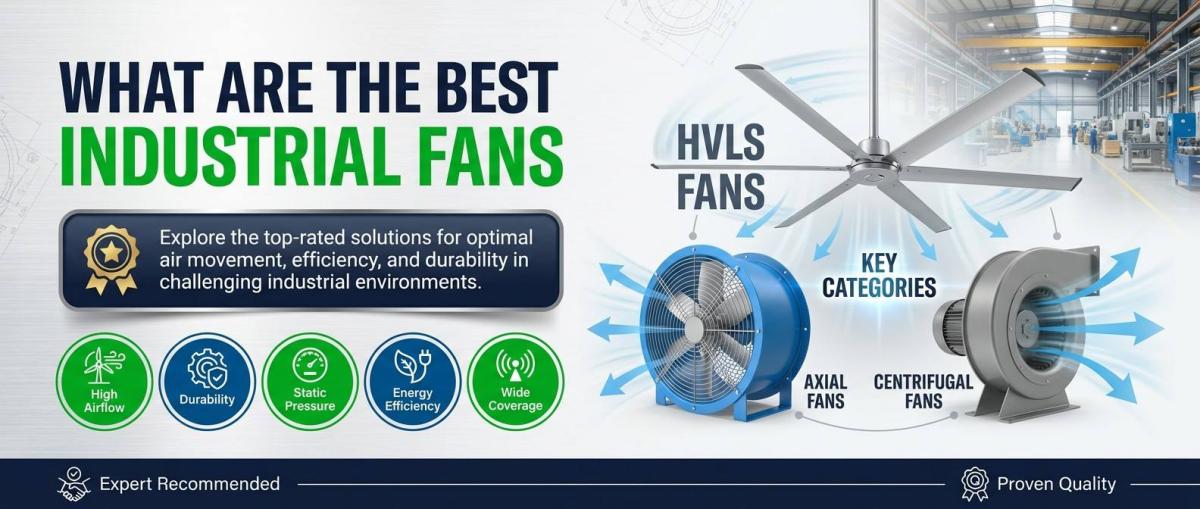
Problem: Choosing the wrong industrial fan creates real problems. I have seen facilities struggle with hot air, poor ventilation, dust buildup, high energy bills, and noisy work areas because the fan wasn’t matched to the job. That becomes frustrating fast. A fan that looks powerful on paper may fail in a ducted system, a dusty workshop, or a large warehouse. The best solution starts with airflow, pressure, environment, efficiency, and maintenance needs.
The best industrial fans are the ones matched to the application. In my experience, axial fans are best for high airflow and low pressure. Centrifugal fans are better for higher pressure and ducted systems. HVLS fans work well in large open spaces. Exhaust fans remove heat and stale air. Blower fans create focused air movement. I never choose by price alone. I compare performance, durability, installation, and total operating cost.
I’m Jason, and I look at industrial fans from a practical point of view. Not every plant needs the biggest fan. It needs the right fan.
What Makes an Industrial Fan “Best”?
When I judge an industrial fan, I do not start with the brand name. I start with the working condition.
A good industrial fan must:
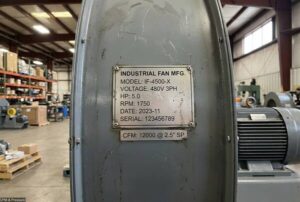
Move the right amount of air (airflow capacity; measured in CFM).
Overcome the right amount of system resistance (static pressure).
Survive the environmental demands (durability).
Run without wasting too much energy (efficiency).
The first thing I check is airflow, usually in CFM (cubic feet per minute). Low airflow means a hot or poorly ventilated space, while excessive airflow can be wasteful and noisy.
Next, static pressure. This matters for ducted systems and systems with resistance. Without enough static pressure, even a strong fan underperforms.
Then, energy efficiency. A fan that runs 24/7 can eat up energy bills if it’s inefficient. I often consult U.S. Department of Energy’s Fan System Efficiency Guide to compare options.
Durability also matters. Fans in industrial settings face heat, dust, and tough duty cycles. I always inspect the motor and structure for long-term reliability.
Maintenance is another key point. Fans that are hard to clean and service cost more over time.
──────────────────────────────────────────────────
Table 1: Key Features Comparison
| Feature | Axial Fans | Centrifugal Fans | HVLS Fans | Blower Fans | Exhaust Fans |
| Airflow Capacity | High | Medium | High | Low-Medium | Medium-High |
| Static Pressure | Low | High | Low | Medium | Low-Medium |
| Space Coverage | Medium | Medium | Very High | Low | Medium-High |
| Efficiency | High | High/Medium | Medium | Medium | High |
| Application | General | Ducted Systems | Warehouses | Spot Cooling | Ventilation |
| Maintenance | Low/Medium | Medium | Low | Low/Medium | Low |
──────────────────────────────────────────────────
Are Axial Fans the Best Industrial Fans?
Axial fans shine when you need high airflow but low pressure. They’re most effective for:
- General factory ventilation
- Wall-mounted exhaust
- Heat removal
- Open workshops
They are not ideal for high resistance (ducts, filters)—their airflow drops if the system fights back. Always check your system design before choosing.
Are Centrifugal Fans Better for Ducted Systems?
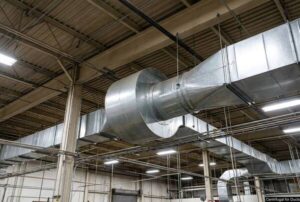
Centrifugal fans are the best for systems with higher pressure or resistance. They excel where air must travel through:
- Ducts
- Filters
- Elbows and dampers
Their design helps them maintain airflow despite obstacles—a great fit for factories and industrial processes.
Remember: Centrifugal fans often need more installation space and can be noisier if not controlled.
Are HVLS Fans the Best for Warehouses?
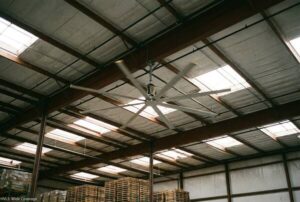
HVLS (High Volume Low Speed) fans are perfect for big, open spaces:
- Warehouses
- Distribution centers
- Large assembly floors
They circulate air gently and efficiently over a wide area—without creating cold drafts. If you’re dealing with stratified heat, stagnant air, or comfort issues in tall-ceiling buildings, HVLS is my go-to choice.
──────────────────────────────────────────────────
Are Exhaust Fans the Best for Ventilation?
Exhaust fans excel at removing air—hot, humid, dusty, or stale—from a building. They are especially crucial when your goal is air exchange. Great for:
- Heat and smoke removal
- Moisture control
- Odor control
Before you size an exhaust fan, check the air changes per hour (ACH) your space requires with this ACH reference guideline.
Tip: Make sure you provide a path for makeup air, or your exhaust system will underperform.
──────────────────────────────────────────────────
Table 2: Fan Type Selection by Application
| Application | Best Fan Type | Justification |
| Open Warehouse | HVLS | Wide coverage, energy efficient |
| Ducted System | Centrifugal | Handles pressure and resistance |
| General Ventilation | Axial | High airflow, low cost |
| Fume Extraction | Centrifugal | Manages duct/static pressure |
| Spot Cooling | Blower | Directed flow, focused performance |
| Dusty Environment | Centrifugal/Exhaust | Resilient, easy to clean, handles filters |
| Moist Area | Exhaust | Removes humidity, improves air quality |
──────────────────────────────────────────────────
Are Blower Fans the Best for Focused Air Movement?
Blower fans are for directed airflow—spot cooling, machine or process air, and drying stations. If you need to put air exactly where you want it, this is your tool. However, they’re less effective for general or building-wide ventilation.
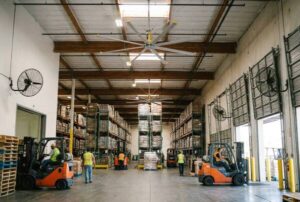
What Are the Best Industrial Fans for Warehouses?
In warehouses, I often recommend:
- HVLS fans for circulation
- Exhaust fans for heat/humidity removal
- Axial fans for high-volume, low-pressure spaces
The building’s layout, size, and problem areas determine my final choice.
──────────────────────────────────────────────────
What Are the Best Industrial Fans for Factories?
In factories, it’s usually a combination:
- Axial fans for general comfort
- Centrifugal fans for ducted/process exhaust
- HVLS fans for big open production floors
Always analyze based on process, dust/fume load, and air path.
──────────────────────────────────────────────────
What Are the Best Industrial Fans for Dusty or Chemical Environments?
For dusty/chemical settings:
- Check the fan material(metal, coated, stainless).
- Opt for centrifugal or exhaust fans rated for these conditions.
- Easy maintenance and filter access are a must.
Never use a standard fan in harsh environments. Corrosion and buildup kill fans fast.
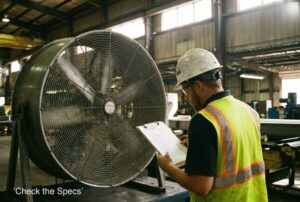
What Buying Factors Should I Check Before Choosing an Industrial Fan?
Here’s my critical checklist:
- Space size & volume
- Required air change rate
- Temperature/humidity range
- Dust, fume, or chemical presence
- Mounting/installation constraints
- Long-term energy and maintenance cost
Never pick by price alone. Long-term cost and reliability win every time.
──────────────────────────────────────────────────
Is the Most Expensive Industrial Fan Always the Best?
No.High price ≠ best choice. Match the fan to:
- Application
- System requirements
- Service environment
- Operating cost
I’ve seen cheap fans rack up huge costs later, and pricey fans underperform when mismatched.
──────────────────────────────────────────────────
More Related Questions
What Is the Best Industrial Fan for High Airflow?
Axial fans are excellent for maximum airflow in open systems.
What Is the Best Industrial Fan for High Pressure?
Centrifugal fans shine when pushing air through ducts or filters.
What Is the Best Fan for Large Buildings?
HVLS fans move air gently in vast open areas.
What Is the Best Fan for Removing Hot Air?
Exhaust fans—quick and efficient air change.
What Is the Best Fan for Spot Cooling?
Blower fans—precise, targeted airflow.
How Do I Determine Fan Size?
Measure your space volume and ACH needs.
Should I Choose Axial or Centrifugal?
Axial for open airflow, centrifugal for resistance/ducts.
Do Fans Reduce Energy Costs?
Yes, when properly sized and efficient (DOE’s fan efficiency guide).
──────────────────────────────────────────────────
Conclusion
The best industrial fan fits your job—not just your budget. Match airflow, pressure, environment, and cost, and your fan will work better for years.