Small rooms get hot fast. A bedroom, home office, kitchen corner, or dorm room can feel stuffy when air does not circulate well. The problem becomes worse when you do not have enough floor space for a pedestal fan or tower fan. That is where a wall-mounted fan becomes useful. It keeps the room cooler, saves space, and improves airflow without cluttering your floor.
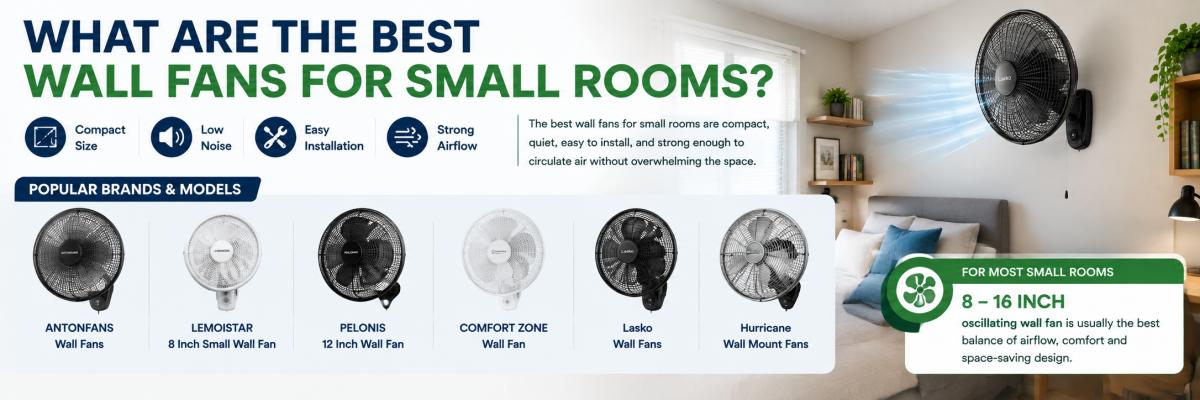
The best wall fans for small rooms are compact, quiet, easy to install, and strong enough to circulate air without overwhelming the space. Good choices include ANTONFANS Wall Fans, LEMOISTAR 8 Inch Small Wall Fan, PELONIS 12 Inch Wall Fan, COMFORT ZONE Wall Fan, Lasko wall fans, and Hurricane wall mount fans. For most small rooms, a 8-inch to 16-inch oscillating wall fan is usually the best balance of airflow, comfort, and space-saving design.
If you want a fan that cools efficiently without taking up floor or desk space, keep reading. Below, I’ll compare top wall fan options, key features, installation tips, and common buying questions.

Quick Answer: Which Wall Fan Is Best for a Small Room?
For a very small room, the LEMOISTAR 8 Inch Small Wall Fan is a practical compact option. For bedrooms and offices, ANTONFANS Wall Fans, PELONIS 12 Inch Wall Fan, and COMFORT ZONE Wall Fan are better choices because they offer a stronger balance of airflow, quiet operation, and daily comfort. If you want a more established mainstream brand, Lasko and Hurricane wall fans are also worth considering.
The best model depends on your room size:
| Room Type | Recommended Fan Size | Best Feature to Prioritize |
|---|---|---|
| Small bedroom | 12–16 inches | Quiet motor and timer |
| Tiny office | 8–12 inches | Low noise and adjustable tilt |
| Kitchen corner | 12–16 inches | Oscillation and easy cleaning |
| Dorm room | 8–12 inches | Compact design and simple mounting |
| Workshop or garage corner | 16 inches or larger | High airflow and durable build |

Why Are Wall Fans Ideal for Small Rooms?
Wall fans are ideal for small rooms because they provide air circulation without using floor space. In a tight bedroom or office, every inch matters. A pedestal fan may block walkways, and a table fan may take over valuable desk space. A wall fan solves both problems by staying mounted above the activity area.
Another key advantage is better air distribution. Many wall fans include oscillation, which means the fan head moves from side to side. This helps spread air across the room instead of blowing in only one direction. In a small room, this can make the whole space feel cooler without needing an air conditioner.
Wall fans are also safer in homes with children or pets. Since the fan is mounted higher on the wall, it is harder to knock over or touch. That makes a wall fan a smart choice for kids’ bedrooms, nurseries, small apartments, and shared living spaces.
What Features Should You Look for in a Small-Room Wall Fan?
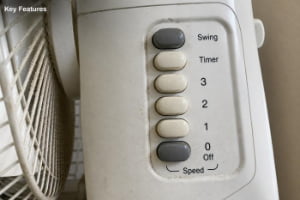
Choosing the right wall fan is easier when you focus on the most important features. For small rooms, you do not always need the largest or most powerful model. Instead, you need a fan that provides comfortable airflow, quiet performance, and easy control.
| Feature | Why It Matters | Best Choice for Small Rooms |
|---|---|---|
| Fan size | Controls airflow coverage | 8–16 inches |
| Oscillation | Spreads air across the room | 90-degree oscillation or wider |
| Speed settings | Lets you adjust comfort | 3 speeds or more |
| Noise level | Important for sleep and work | Quiet/low-noise motor |
| Remote control | Useful when mounted high | Recommended |
| Timer | Saves energy overnight | Recommended for bedrooms |
| Adjustable tilt | Directs airflow better | Very useful |
| Easy-clean grille | Reduces dust buildup | Removable grille preferred |
The most important key point is this: do not buy only based on fan size. A smaller fan with good oscillation and strong design may perform better in a small room than a larger fan that is noisy or hard to control.
What Are the Top Wall Fan Models for Small Rooms?
Below are suitable wall fan brands and models for small rooms. I removed the iPower 18-Inch Wall Mount Fan because it is commonly used as an exhaust or ventilation fan and does not match the requirement for a typical indoor small-room wall fan.
1. ANTONFANS Wall Fans
Best for: Bedrooms, home offices, compact apartments, and daily indoor use.
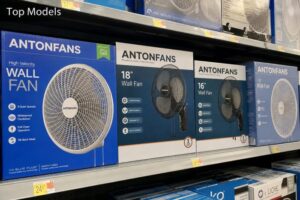
ANTONFANS Wall Fans are a strong option if you want a fan designed with compact indoor comfort in mind. Many users look for ANTONFANS because the brand focuses on practical airflow, modern design, and easy use. For small rooms, ANTONFANS is especially suitable if you want a fan that does not look bulky on the wall.
The biggest advantages are space-saving installation, steady airflow, and convenient controls. If you want a clean-looking fan for a bedroom or office, ANTONFANS is worth considering.
2. LEMOISTAR 8 Inch Small Wall Fan
Best for: Very small rooms, bathrooms, kitchen corners, dorm rooms, and compact workspaces.
The LEMOISTAR 8 Inch Small Wall Fan is a good choice when space is extremely limited. Its small blade size makes it easier to install in tight areas where a 16-inch fan would look too large. This model is especially useful for people who need light airflow rather than heavy cooling power.
The key advantage is its compact size. It works well for personal cooling near a desk, bed, or small kitchen area. However, because it is only 8 inches, it is best for very small spaces, not larger rooms.
3. PELONIS 12 Inch Wall Fan
Best for: Small bedrooms, offices, study rooms, and medium-small indoor spaces.
The PELONIS 12 Inch Wall Fan is a balanced option for people who want something stronger than an 8-inch fan but still compact enough for a small room. PELONIS is a known home appliance brand, and its fans are commonly chosen for everyday household cooling.
The 12-inch size is one of the best choices for small rooms because it provides enough airflow without being too large. Look for features like oscillation, multiple speed settings, and adjustable tilt when comparing PELONIS models.
4. COMFORT ZONE Wall Fan
Best for: Bedrooms, kitchens, home offices, and budget-friendly cooling.
The COMFORT ZONE Wall Fan is another practical option for small rooms. COMFORT ZONE fans are known for being accessible, simple to use, and suitable for everyday home comfort. If you want a wall fan that is easy to install and does the basic job well, this brand is worth reviewing.
The main strengths are value, simple controls, and dependable airflow. Depending on the model, you may find features such as pull-chain operation, oscillation, adjustable speeds, and tilting fan heads.
5. Lasko 16-Inch Oscillating Wall Fan
Best for: Small to medium rooms where stronger airflow is needed.
Lasko is one of the most recognized fan brands in the U.S. A Lasko 16-inch oscillating wall fan can be a good option if your small room gets very warm or has poor airflow. It is larger than an 8-inch or 12-inch model, but because it mounts to the wall, it still saves floor space.
The main benefits are wide oscillation, strong airflow, and brand reliability. For bedrooms, choose a model with quieter settings or a timer if available.
6. Hurricane Classic Wall Mount Fan
Best for: Kitchens, garages, workshops, and small rooms that need stronger airflow.
The Hurricane Classic Wall Mount Fan is more powerful than many compact household wall fans. It may be more than necessary for a tiny bedroom, but it works well in spaces that need stronger air movement, such as a kitchen, laundry room, garage corner, or workshop.
The main advantage is powerful airflow and durable design. If you choose Hurricane for a small room, make sure the fan has adjustable speeds so you can reduce airflow when needed.
Which Wall Fan Should You Choose?
If you want the easiest recommendation, use this simple guide:
| Best Use Case | Recommended Brand/Model |
|---|---|
| Best overall for small rooms | ANTONFANS Wall Fans |
| Best for very tiny spaces | LEMOISTAR 8 Inch Small Wall Fan |
| Best balanced 12-inch option | PELONIS 12 Inch Wall Fan |
| Best budget-friendly option | COMFORT ZONE Wall Fan |
| Best mainstream household brand | Lasko Wall Fan |
| Best for stronger airflow | Hurricane Classic Wall Mount Fan |
For most bedrooms and offices, I would start with ANTONFANS, PELONIS, or COMFORT ZONE. For very tight corners, choose LEMOISTAR 8 Inch. For stronger airflow, consider Lasko or Hurricane.

How Do You Install a Wall Fan in a Small Room?
Installing a wall fan is usually simple, but placement matters. The best position is often high on the wall, facing the main area where you sit, sleep, or work. Avoid placing the fan too close to curtains, shelves, or loose objects.
Basic installation steps:
- Choose the wall location. Pick a strong wall surface with enough clearance around the fan.
- Check the power source. Make sure the cord can safely reach an outlet without stretching.
- Mark the mounting holes. Use the fan bracket as a guide.
- Drill pilot holes. Use anchors if mounting into drywall.
- Secure the bracket. Tighten screws firmly.
- Attach the fan. Make sure it locks into the bracket correctly.
- Test oscillation and speeds. Confirm that the fan moves freely and does not hit anything.
The key point: never mount a wall fan loosely. A poorly installed fan can vibrate, become noisy, or fall. If you are unsure, ask a professional installer.

How Do You Maintain a Wall Fan?
A wall fan needs regular cleaning because dust collects on the grille and blades. Dust buildup can reduce airflow and make the fan noisier.
Follow this simple maintenance routine:
- Turn off and unplug the fan before cleaning.
- Wipe the grille weekly with a dry or slightly damp cloth.
- Clean the blades monthly if the grille is removable.
- Check screws and brackets every few months.
- Do not spray water directly into the motor.
- Replace the fan if you notice burning smells, damaged cords, or unstable operation.
The most important maintenance habit is dust removal. A clean fan runs better, looks better, and lasts longer.
More Related Questions
Are Wall Fans Better Than Table Fans for Small Rooms?
Yes, in many cases. Wall fans save floor and desk space, which makes them better for small rooms. Table fans are easier to move, but they take up surface space and may not distribute air as evenly.
What Size Wall Fan Is Best for a Bedroom?
For most small bedrooms, a 12-inch to 16-inch wall fan works best. A 12-inch fan is better for quiet personal cooling, while a 16-inch fan is better for stronger room-wide airflow.
Is an 8-Inch Wall Fan Powerful Enough?
An 8-inch wall fan can be powerful enough for very small spaces, such as a dorm corner, bathroom, or personal office area. However, it may not cool an entire bedroom as effectively as a 12-inch or 16-inch fan.
Should I Choose a Wall Fan with Remote Control?
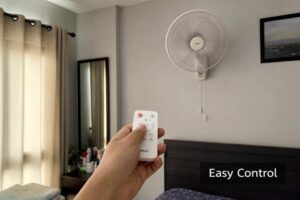
Yes, if possible. A remote control is very useful because wall fans are usually mounted higher than table fans. It allows you to adjust speed, oscillation, and timer settings without getting up.
Are Wall Fans Noisy?
Some are, but many modern wall fans are designed for quiet operation. If you plan to use the fan in a bedroom or office, choose a model with multiple speed settings so you can use a lower, quieter speed when needed.
Can I Use a Wall Fan in a Bathroom?
You can use a wall fan in a bathroom only if the fan is suitable for that environment and kept away from water. For bathrooms, always prioritize moisture safety, proper electrical placement, and ventilation.
Conclusion
The best wall fan for a small room should be compact, quiet, safe, and easy to control. For most users, ANTONFANS, LEMOISTAR, PELONIS, COMFORT ZONE, Lasko, and Hurricane offer practical options. Match the fan size to your room, install it securely, and clean it regularly.