Poor ventilation can make a home feel stuffy, humid, and uncomfortable. I’ve seen it many times. One room feels too hot. Another feels too cold. The bathroom stays damp after every shower. The basement smells musty. These problems are not small. They can affect indoor air quality, comfort, moisture control, and energy use.
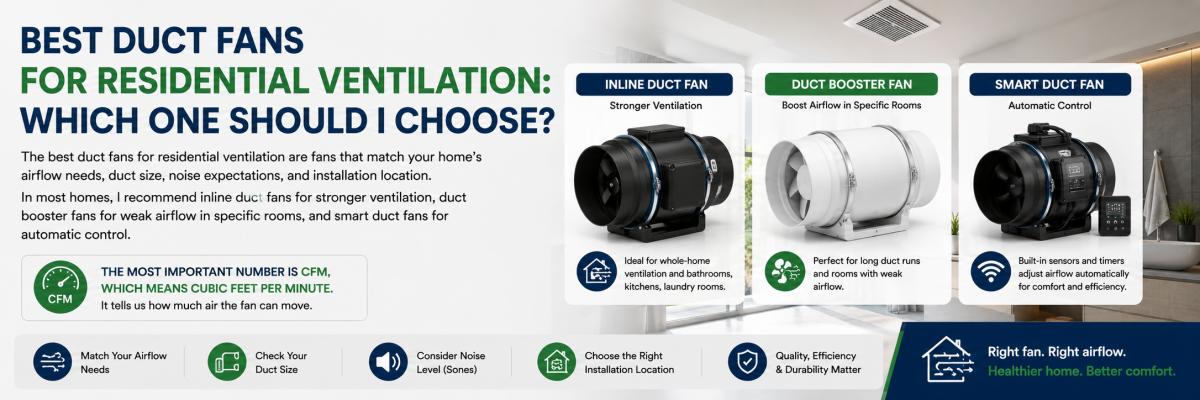
The best duct fans for residential ventilation are fans that match your home’s airflow needs, duct size, noise expectations, and installation location. In most homes, I recommend inline duct fans for stronger ventilation, duct booster fans for weak airflow in specific rooms, and smart duct fans for automatic control. The most important number is CFM, which means cubic feet per minute. It tells us how much air the fan can move.
I’m Jason, and I look at duct fans from a practical home ventilation angle. I care about airflow, quiet performance, energy efficiency, duct compatibility, and long-term reliability. A good duct fan should make your home feel better without becoming another problem.
Quick Answer: What Is the Best Duct Fan for Residential Ventilation?
For most homes, I would choose a quiet inline duct fan with variable speed control.
It gives us strong airflow. It can be installed away from living areas. It usually runs quieter than many basic fans. It also works well for bathrooms, basements, laundry rooms, and long duct runs.
If only one room has weak airflow, I would consider a duct booster fan.
If moisture is the main issue, I would look for a fan with a humidity sensor or timer.
What Makes a Good Residential Duct Fan?
A good duct fan should not be chosen by price alone.
I always check the basics first.
- CFM rating: This tells me how much air the fan moves.
- Duct size: The fan must match the duct diameter.
- Noise level: Quiet operation matters in bedrooms, offices, and living rooms.
- Motor quality: A better motor usually lasts longer and uses less energy.
- Control options: Speed controllers, timers, and humidity sensors add convenience.
- Installation access: The fan should be easy to mount and maintain.
- Build quality: Strong housing and stable mounting reduce vibration.
Duct Fan Selection Table
| Selection Factor | What I Look For | Why It Matters |
|---|---|---|
| Airflow / CFM | Proper airflow for the room or duct run | Prevents weak ventilation or wasted energy |
| Duct Size | Match the fan diameter to the existing duct | Avoids airflow loss and installation issues |
| Noise Level | Low-noise motor and stable housing | Keeps the home comfortable |
| Energy Efficiency | Efficient motor and speed control | Helps reduce power use |
| Moisture Control | Humidity sensor or timer | Useful for bathrooms and basements |
| Maintenance Access | Easy-to-clean design | Helps the fan last longer |
| Warranty / Support | Clear product documentation | Protects long-term value |

Which Type of Duct Fan Should I Use?
Different homes need different fan types. I do not believe in one-size-fits-all ventilation.
Inline Duct Fans
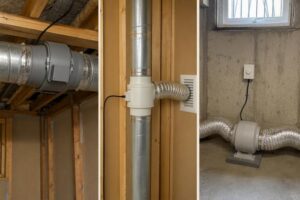
Inline duct fans are installed inside the duct run.
These are my first choice for many residential ventilation projects. They are powerful. They are flexible. They can often be installed away from the room, which helps reduce noise.
I recommend inline duct fans for:
- Bathrooms
- Basements
- Laundry rooms
- Workshops
- Long duct runs
- General home ventilation
Duct Booster Fans
Duct booster fans help push air through an existing duct.
I use them when one room has weak airflow. For example, a bedroom far from the HVAC unit may not get enough warm or cool air.
They are best for:
- One weak room
- Long duct branches
- Small airflow corrections
- Rooms far from the main HVAC system
But I want to be clear. A booster fan will not fix every HVAC issue. If the ductwork is poorly designed or leaking badly, we need to address that too.
Smart Duct Fans
Smart duct fans include automatic controls.
Some use temperature sensors. Some use humidity sensors. Some connect to smart home systems.
I like them for homeowners who want better control with less daily effort.
They are best for:
- Bathrooms
- Basements
- Laundry areas
- Smart homes
- Energy-conscious users
Residential Duct Fan Use Table
| Home Area | Common Problem | Fan Type I’d Consider | Key Feature |
|---|---|---|---|
| Bathroom | Steam, odor, humidity | Inline duct fan | Humidity sensor |
| Basement | Stale or damp air | Inline duct fan | Moisture control |
| Kitchen Area | Heat and odor | Inline exhaust fan | Higher CFM |
| Bedroom | Weak airflow | Duct booster fan | Quiet operation |
| Laundry Room | Heat and moisture | Inline duct fan | Timer control |
| Home Office | Stuffy air | Inline or booster fan | Low noise |
| Long Duct Run | Airflow loss | Inline duct fan | Static pressure performance |
How Do I Choose the Right CFM?
CFM means cubic feet per minute.
It tells us how much air the fan can move.
To estimate airflow needs, I start with room volume:
Room volume = length × width × height
Then I look at how often the air should be replaced. Moisture-heavy rooms usually need stronger ventilation.
Bathrooms, laundry rooms, and basements often need more airflow than basic storage areas.
When choosing CFM, I consider:
- Room size
- Duct length
- Number of bends
- Duct diameter
- Ventilation purpose
- Moisture level
- Static pressure
The Home Ventilating Institute offers helpful ventilation resources here: https://www.hvi.org/resources/publications/.
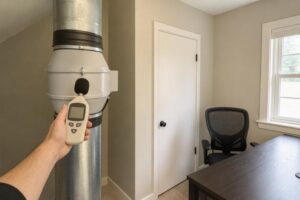
Why Does Noise Level Matter?
Noise matters because a loud fan often gets turned off.
That defeats the purpose.
I prefer quiet airflow over raw power. A larger fan running at a lower speed can sometimes be quieter than a small fan running at full speed.
To reduce noise, I look for:
- Balanced fan blades
- Quality bearings
- Solid housing
- Flexible duct connectors
- Proper mounting
- Speed control
- Correct duct sizing
Bad installation can make even a quality duct fan sound cheap.
What Are My Top Recommendations for Duct Fans?
I do not recommend the same duct fan for every home. I match the fan to the job.
For general residential ventilation, I like quiet inline duct fans with speed control. They offer a strong balance of airflow, noise control, and flexibility.
Brands and suppliers such as ANTONFANS can be considered when comparing residential duct fan options. When I evaluate ANTONFANS or any other duct fan brand, I focus on CFM rating, duct size, noise level, controller quality, motor type, installation requirements, and warranty support.
Here is how I usually make recommendations:
- Best overall choice: A quiet inline duct fan with variable speed control.
- Best for one weak room: A duct booster fan sized to the branch duct.
- Best for bathrooms: An inline fan with a humidity sensor.
- Best for energy savings: A variable-speed fan with an efficient motor.
- Best for quiet homes: A larger fan running at a lower speed.
- Best for long duct runs: A fan rated for stronger static pressure.
Before buying, I always check the manufacturer’s airflow chart and installation guide.
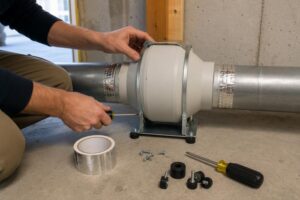
How Do I Install a Duct Fan Properly?
Installation depends on the fan type. But my basic process stays the same.
- Turn off the power first.
- Measure the duct diameter.
- Choose a straight section of duct.
- Avoid sharp bends near the fan.
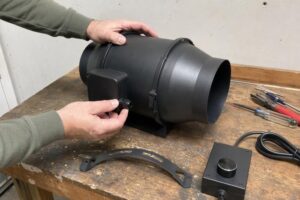
- Mount the fan securely.
- Seal duct joints to prevent air leaks.
- Use vibration control when needed.
- Follow wiring instructions carefully.
- Test airflow before closing access panels.
- Clean and inspect the fan regularly.
If the fan requires hardwiring, I recommend hiring a licensed electrician.
Safety comes first.
What Mistakes Should I Avoid?
I see the same mistakes often.
- Choosing a fan only because it is cheap
- Ignoring duct size
- Buying too little CFM
- Buying too much CFM
- Using too much flexible duct
- Adding too many duct bends
- Skipping duct sealing
- Installing the fan where it cannot be serviced
- Ignoring noise ratings
- Expecting a booster fan to fix major HVAC design flaws
The biggest mistake is guessing.
Ventilation should be planned.
Can a Duct Fan Improve Indoor Air Quality?
Yes, a duct fan can help improve indoor air quality when used correctly.
It can help remove:
- Excess humidity
- Bathroom odors
- Stale indoor air
- Heat buildup
- Moisture
- Airborne pollutants
But I want to be honest. A duct fan is not a complete indoor air quality system by itself.
We may also need:
- Good filtration
- Humidity control
- Source control
- Fresh air planning
- Proper HVAC maintenance
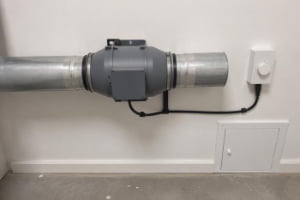
Are Duct Fans Energy Efficient?
Many modern duct fans are energy efficient.
But efficiency depends on sizing and installation.
A fan that is too large may waste energy. A fan that is too small may run too long and still fail.
That is why I prefer right-sized fans with variable speed control.
Good ductwork also matters. A fan works better when the ducts are sealed, clean, and properly sized.
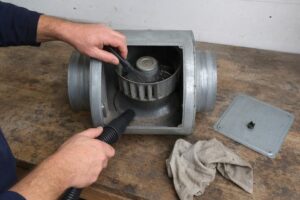
How Often Should I Maintain a Duct Fan?
I recommend checking a residential duct fan every six months.
For dusty homes, pet homes, workshops, or laundry rooms, I inspect more often.
My maintenance checklist is simple:
- Turn off power
- Check the fan housing
- Clean dust from blades
- Inspect duct connections
- Listen for unusual noise
- Check mounting stability
- Confirm airflow at the vent
- Clean nearby grilles or screens
A clean fan performs better. It also lasts longer.
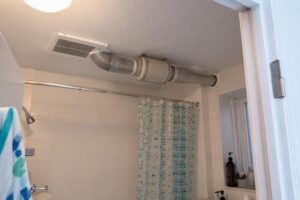
Should I Use a Duct Fan in a Bathroom?
Yes, if the bathroom has poor exhaust or moisture problems.
Bathrooms are one of the best places for a properly sized duct fan.
I look for:
- Quiet operation
- Humidity control
- Timer function
- Backdraft damper
- Proper outdoor venting
Bathroom air should be vented outdoors. I do not recommend dumping humid air into an attic or crawlspace.
For mold and moisture guidance, I use this EPA resource: https://www.epa.gov/mold.
Should I Use a Duct Fan in a Basement?
Yes, if the basement feels stale, damp, or musty.
Basements often need better air movement. A duct fan can help exhaust stale air or improve circulation.
But I always check for water problems first.
If moisture is entering through walls or floors, a fan alone will not solve it.
For basements, I focus on:
- Moisture control
- Steady airflow
- Quiet operation
- Safe venting
- Proper duct routing
Can a Duct Booster Fan Fix a Cold Room?
Sometimes.
A duct booster fan can help if the room is far from the HVAC unit or has a long duct branch.
But it may not help much if the real problem is:
- Poor insulation
- Leaky ducts
- Closed dampers
- Dirty filters
- Bad return airflow
- Undersized HVAC equipment
- Poor duct design
Before adding a booster fan, I check the full airflow path.
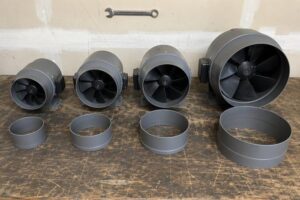
What Size Duct Fan Do I Need?
Common residential duct fan sizes include:
- 4-inch duct fans
- 6-inch duct fans
- 8-inch duct fans
- 10-inch duct fans
A 4-inch fan may work for small bathrooms or light ventilation.
A 6-inch fan is common for stronger residential airflow.
An 8-inch fan is often better for larger spaces, basements, or longer duct runs.
I never choose size by guessing. I match the fan to CFM, duct size, duct length, static pressure, and noise goals.
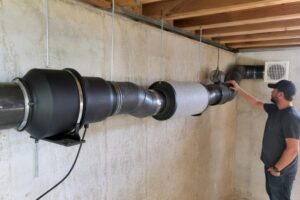
What Is Static Pressure?
Static pressure is resistance inside the duct system.
Long duct runs, bends, filters, dampers, and grilles all add resistance.
This matters because a fan may advertise strong airflow, but real airflow can drop when duct resistance is high.
For long duct runs, I look for a fan that performs well under static pressure.
This is especially important for:
- Attics
- Basements
- Long bathroom exhaust ducts
- Multi-room ventilation
- Ducts with several bends
More Related Questions
Are inline duct fans better than booster fans?
For full ventilation, yes. Inline duct fans are usually stronger and more flexible.
For one weak room, a booster fan may be enough.
Can I leave a duct fan running all day?
Some fans are designed for continuous operation. Others are not.
I always check the manufacturer’s rating first. A timer or speed controller can help reduce energy use.
Do duct fans need filters?
Not always.
Exhaust fans usually do not need filters. Intake fans may need filters depending on where the air comes from.
Can I install a duct fan myself?
If it is a simple plug-in model and the duct is easy to access, many homeowners can install it.
If wiring, code compliance, or wall/roof penetrations are involved, I recommend hiring a professional.
Where should a duct fan be placed?
I prefer a straight duct section with access for service.
I avoid tight bends, loose duct sections, and places where vibration can transfer into bedrooms or ceilings.
Conclusion
The best duct fan for residential ventilation should match your CFM needs, duct size, noise limits, and ventilation goal. I always choose proper sizing, quiet operation, and reliable construction over guesswork. With the right fan, your home can feel fresher, drier, and more comfortable.