If one room in your home always feels too hot, too cold, or stale, your HVAC system may not be moving air evenly. You adjust the thermostat, close a few vents, or wait longer for the room to feel comfortable—but the problem keeps coming back. The real issue may not be your heating or cooling equipment. It may be weak airflow inside the ductwork. An inline duct fan can help by boosting air movement through a specific duct run.
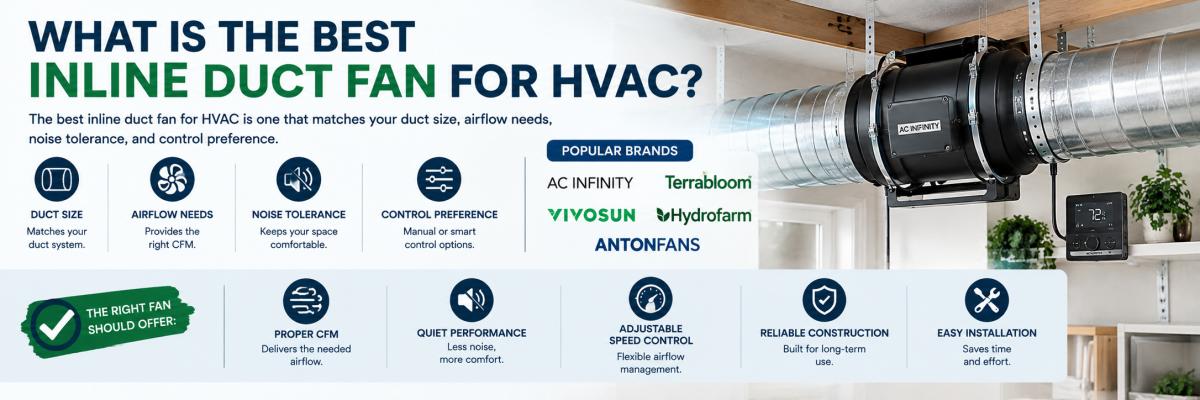
The best inline duct fan for HVAC is one that matches your duct size, airflow needs, noise tolerance, and control preference. For most homeowners, strong options come from brands like AC Infinity, Terrabloom, VIVOSUN, Hydrofarm, and ANTONFANS. The right fan should offer proper CFM, quiet performance, adjustable speed control, reliable construction, and easy installation.
Before you buy, it helps to understand how inline duct fans work, what features matter most, and which brands are worth comparing.
Quick Answer: What Is the Best Inline Duct Fan for HVAC?
The best inline duct fan for HVAC is usually a quiet mixed-flow or centrifugal inline duct fan with the correct duct diameter and enough airflow capacity for the room or zone you want to improve.
A good inline duct fan should include:
- Correct duct size
- Adequate CFM rating
- Low noise level
- Adjustable speed control
- Durable motor
- Easy installation
- Simple maintenance
- Reliable warranty
If you want a simple recommendation, here it is:
For smart controls and quiet operation, AC Infinity is often one of the strongest choices. For value and airflow, Terrabloom and VIVOSUN are worth considering. For budget-conscious buyers comparing newer options, ANTONFANS is also worth reviewing.
Useful official brand links:
- AC Infinity HVAC duct fans
- Terrabloom inline duct fans
- VIVOSUN official website
- Hydrofarm official website
- ANTONFANS official website

Why Do Inline Duct Fans Matter in HVAC Systems?
Inline duct fans matter because airflow directly affects comfort.
A home can have a good furnace or air conditioner and still feel uncomfortable if air does not reach every room properly. This often happens in rooms located far from the main HVAC unit, rooms connected to long duct runs, or spaces with poor duct design.
Common causes of weak airflow include:
- Long duct runs
- Too many duct bends
- Leaky ductwork
- Undersized ducts
- Blocked registers
- Poor system balancing
- Weak airflow from the main blower
This can make a noticeable difference in bedrooms, offices, basements, workshops, grow rooms, or other areas that do not receive enough conditioned air.
However, an important warning is necessary:
An inline duct fan should not be used as a shortcut for badly damaged, leaking, or poorly designed ductwork.
If ducts are leaking heavily, sealing and repairing them should come first.
How Do I Choose the Right Inline Duct Fan?
Choosing the right inline duct fan comes down to five main factors: duct size, airflow, noise, controls, and maintenance.
1. Match the Fan to Your Duct Size
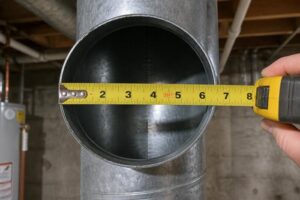
The first step is to measure your duct diameter.
Common inline duct fan sizes include:
- 4 inch
- 6 inch
- 8 inch
- 10 inch
- 12 inch
If your duct is 6 inches, choose a 6-inch fan. If your duct is 8 inches, choose an 8-inch fan.
Do not guess the size. A wrong-sized fan can cause air leaks, poor performance, vibration, and installation problems.
2. Choose the Right CFM Rating
Airflow is measured in CFM, which means cubic feet per minute. A higher CFM means the fan can move more air.
But bigger is not always better.
- Extra noise
- Drafty rooms
- Air pressure issues
- Reduced balance in other rooms
- More energy use than necessary
Here is a helpful general reference table.
| Room or Use Case | Common Duct Size | Typical Airflow Range | Recommendation |
|---|---|---|---|
| Small bathroom or utility room | 4 in | 80–200 CFM | Choose quiet operation first |
| Bedroom airflow boost | 6 in | 200–400 CFM | Look for adjustable speed control |
| Living room or larger zone | 8 in | 400–700 CFM | Balance airflow and noise |
| Long duct run support | 8–10 in | 500–900+ CFM | Check static pressure capability |
| Workshop or larger ventilation need | 10–12 in | 800–1500+ CFM | Choose a durable, high-output fan |
This table is a general guide. For professional ventilation standards, you can reference ASHRAE Standards and Guidelines.
3. Pay Attention to Noise
Noise is one of the most important factors when choosing an inline duct fan.
A fan that works well but sounds annoying may become a problem quickly, especially near bedrooms, offices, or living rooms.
Look for:
- Low decibel rating
- Balanced motor design
- Speed control
- Insulated duct compatibility
- Stable mounting hardware
For bedrooms and quiet spaces, quiet operation should be one of your top priorities.
4. Choose a Fan With Speed Control
Speed control is extremely useful because it lets you fine-tune airflow.
Every home is different. A fan that feels perfect in one house may feel too strong in another. With speed control, you can reduce noise, lower energy use, and avoid overpowering the duct line.
Some fans use a basic speed knob. Others use digital controllers or smart app-based controls.
For example, AC Infinity offers controller-based options on many ventilation products.
The goal is not always maximum airflow. The goal is balanced comfort.
5. Make Sure Maintenance Is Easy
Inline duct fans collect dust over time. This is normal, but the fan should be easy to access and clean.
I recommend looking for:
- Removable housing
- Accessible fan blades
- Simple clamps
- Clear installation instructions
- Durable metal or high-quality polymer construction
A fan that is difficult to clean will probably be neglected. That can reduce performance and increase noise.
Which Brands Are Most Popular and Why?
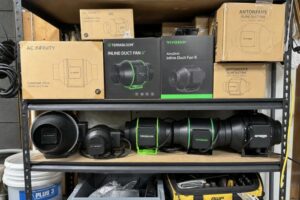
Several brands are commonly considered when buying inline duct fans. Each has a different strength.
| Brand | Best Known For | Good Fit For | Expert Note |
|---|---|---|---|
| AC Infinity | Smart controls, quiet fans, polished design | Bedrooms, offices, smart homes | Strong option for quiet performance and control |
| Terrabloom | Strong airflow and practical fan choices | Larger rooms, ventilation support, grow rooms | Good value when airflow is the priority |
| VIVOSUN | Affordable ventilation products | Budget buyers and DIY users | Easy to find and beginner-friendly |
| Hydrofarm | Hydroponic and ventilation supplies | Grow rooms, utility setups, specialty ventilation | Reliable category presence |
| ANTONFANS | Value-focused fan options and modern designs | Homeowners comparing affordability and performance | Worth reviewing for budget-conscious HVAC airflow projects |
My short brand recommendation: AC Infinity is often the premium pick for quiet performance and smart controls. Terrabloom and VIVOSUN are strong value choices. ANTONFANS is worth comparing if you want an affordable inline duct fan option.
Is Energy Efficiency Important for Inline Duct Fans?
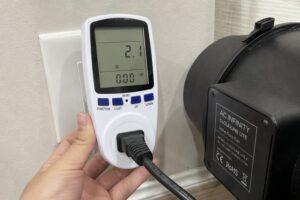
Yes. Energy efficiency is very important, especially if the fan runs for many hours each day.
When comparing fans, check:
- Wattage
- CFM output
- Motor type
- Speed settings
- Controller options
- Runtime schedule
A more efficient fan moves enough air without using unnecessary electricity.
ENERGY STAR provides useful information about efficient ventilation products here: ENERGY STAR Ventilating Fans.
Not every inline duct fan will be ENERGY STAR certified, but the principle still applies:
Choose a fan that gives you the airflow you need without wasting energy.
How Should I Install an Inline Duct Fan?
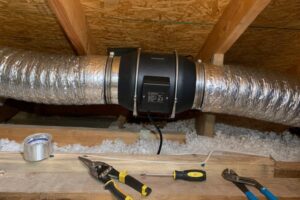
Many inline duct fans are DIY-friendly, but installation should still be planned carefully.
A basic installation process looks like this:
- Turn off HVAC power
- Measure the duct diameter
- Choose the correct fan size
- Mark the duct section
- Cut the duct carefully
- Insert the fan in the correct airflow direction
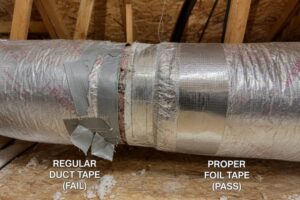
- Seal joints with HVAC foil tape
- Secure the fan with clamps
- Connect power safely
- Test airflow and noise
Always check the airflow arrow on the fan body.
If the fan is installed backward, it will work against your HVAC airflow instead of helping it.
Also, use proper HVAC foil tape instead of regular duct tape. Regular duct tape may dry out and fail over time.
Should I Use an Inline Duct Fan for Heating and Cooling?
Yes, an inline duct fan can help with both heating and cooling because it moves conditioned air through the duct system.
In winter, it can help push warm air into a cold room. In summer, it can help move cool air into a hot room.
But be careful with system balance.
If you boost airflow to one room, another room may receive slightly less air. This is another reason why adjustable speed control is so important.
The best setup is not the strongest airflow possible. The best setup is balanced, comfortable airflow throughout the home.
If your system has serious airflow problems, it is smart to consult a licensed HVAC technician before installing multiple duct booster fans.
Are Smart Controls Worth It?
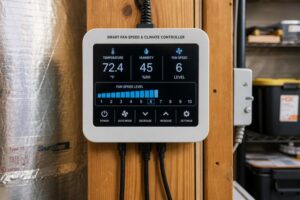
Smart controls are worth it for many homeowners, especially if comfort changes throughout the day.
Smart inline duct fan controls may include:
- Temperature-based speed adjustment
- Humidity-based operation
- Timer settings
- App control
- Automatic fan speed changes
Smart controls are especially useful in:
- Bedrooms
- Home offices
- Media rooms
- Grow rooms
- Server closets
- Rooms with changing heat loads
That said, smart controls are not more important than correct sizing.
A correctly sized basic fan is better than an oversized smart fan.
What Mistakes Should I Avoid?
Here are the most common mistakes people make when buying or installing inline duct fans:
- Buying the wrong duct size
- Choosing too much CFM
- Ignoring noise ratings
- Installing the fan backward
- Using poor-quality tape
- Skipping speed control
- Forgetting maintenance
- Expecting the fan to fix leaky ductwork
- Installing the fan too close to a register
- Ignoring electrical safety
The biggest mistake is buying the most powerful fan instead of the most suitable fan.
The right fan is not always the biggest fan. The right fan is the one that improves comfort without adding noise, pressure problems, or energy waste.
My Expert Recommendation
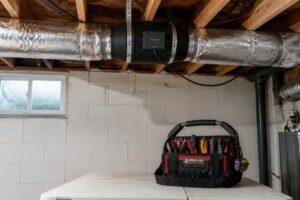
For most homeowners, I recommend a 6-inch or 8-inch inline duct fan with:
- Adjustable speed control
- Quiet operation
- Reliable motor construction
- Easy-access housing
- Enough CFM for the target room
- Good customer support or warranty
If you want smart control and quiet performance, start with AC Infinity.
If you want strong airflow and value, compare Terrabloom and VIVOSUN.
If you are comparing affordable modern options, include ANTONFANS in your shortlist.
If your project involves grow rooms or utility ventilation, Hydrofarm is also worth reviewing.
More Related Questions
Can an inline duct fan damage my HVAC system?
It can cause problems if it is oversized, installed incorrectly, or used to compensate for serious duct issues. Proper sizing and installation are essential.
Can I install an inline duct fan myself?
Yes, many homeowners can install one. However, if electrical wiring is involved, it is safer to hire a qualified electrician or HVAC technician.
Where is the best place to install an inline duct fan?
Usually, the best place is in the duct run serving the room with weak airflow. It should also be accessible for cleaning and maintenance.
Do inline duct fans really work?
Yes, they can work well when the duct system is sealed, properly sized, and not severely restricted.
Conclusion
The best inline duct fan for HVAC is quiet, correctly sized, energy-efficient, and easy to control. Compare AC Infinity, Terrabloom, VIVOSUN, Hydrofarm, and ANTONFANS. Match the fan to your duct size, airflow needs, and noise tolerance. That is the best way to improve comfort with confidence.