Have you ever bought an exhaust fan, installed it, and still felt moisture, odor, or heat hanging in the room? That is frustrating. I see this problem often. People focus on the visible blade count, but they ignore CFM, noise rating, duct size, motor quality, and static pressure. Then the fan looks right but performs badly. So today, I’m Jason, and I’m going to make the 3 blade vs 4 blade exhaust fan choice much easier.
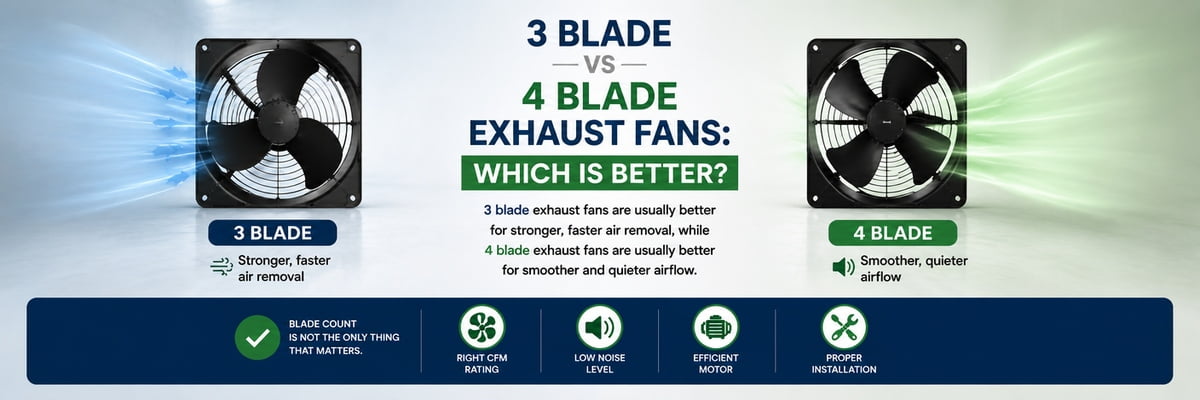
Here is my short answer: a 3 blade exhaust fan is usually better for stronger, faster air removal, while a 4 blade exhaust fan is usually better for smoother and quieter airflow. But blade count alone does not decide performance. The better fan is the one with the right CFM rating, low noise level, efficient motor, and proper installation.
If you only remember one thing, remember this: do not buy an exhaust fan only because it has 3 blades or 4 blades. I always check the full fan design first.
Quick Answer: 3 Blade Vs 4 Blade Exhaust Fans
A 3 blade exhaust fan normally has less blade drag. That can help it spin faster and move air more directly.
A 4 blade exhaust fan normally creates smoother airflow. It may feel more balanced and less harsh.
But in real use, the difference depends on the whole fan system.
That includes:
- Motor power
- Blade angle
- Fan diameter
- Duct length
- Vent cover design
- CFM rating
- Noise rating in sones
- Installation quality
For bathroom ventilation, I also recommend checking guidance from the Home Ventilating Institute. These sources focus on real performance, not just blade count.
──────────────────────────────────────────────────
3 Blade Vs 4 Blade Exhaust Fans: Main Comparison Table
| Feature | 3 Blade Exhaust Fan | 4 Blade Exhaust Fan | My Expert Take |
| Airflow style | More direct and forceful | Smoother and more even | 3 blade feels stronger; 4 blade feels softer |
| Best use | Kitchens, workshops, larger spaces | Bathrooms, bedrooms, offices | Match it to the room |
| Noise level | Can be louder at high speed | Often quieter at lower speed | Check the sone rating |
| Energy use | Often efficient due to lower drag | May need slightly more power | Motor design matters more |
| Air removal speed | Usually faster | Usually steadier | Choose 3 blade for quick exhaust |
| Comfort | Can feel more aggressive | Usually more balanced | Choose 4 blade for quiet comfort |
| Maintenance | Easier to wipe due to fewer blades | Slightly more surface to clean | Difference is small |

What Is a 3 Blade Exhaust Fan?
A 3 blade exhaust fan uses three rotating blades to pull indoor air out of a room.
I usually see this design in:
- Kitchens
- Utility rooms
- Garages
- Workshops
- Commercial exhaust setups
- Wall-mounted ventilation fans
The biggest benefit is strong airflow.
This makes it useful when you need to remove:
- Cooking smoke
- Heat
- Steam
- Odors
- Dust
- Stale air
In my experience, a good 3 blade fan is a solid choice when the room needs fast air extraction.
But there is one tradeoff.
A 3 blade fan can sometimes sound sharper or stronger, especially at high speed. So if you are installing it near a quiet bedroom or small bathroom, check the noise rating first.
For noise and airflow verification, I like using certified performance data from the HVI Certified Products Directory.
What Is a 4 Blade Exhaust Fan?
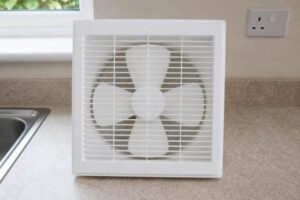
A 4 blade exhaust fan uses four blades instead of three.
I often recommend 4 blade exhaust fans for:
- Bathrooms
- Laundry rooms
- Small kitchens
- Offices
- Bedrooms
- Quiet indoor areas
The main benefit is balanced airflow.
A 4 blade fan may not always feel as powerful as a 3 blade fan, but it often feels more comfortable. It may also produce less vibration if the fan is well-built.
That matters a lot in small rooms.
If a fan is too loud, people stop using it. And if people stop using the exhaust fan, humidity and odor problems come back.
That is why I always say: a quiet fan that people actually use is better than a powerful fan they avoid turning on.

Which Exhaust Fan Moves More Air?
In many cases, a 3 blade exhaust fan moves air faster.
But I want to be clear.
Blade count does not equal CFM.
CFM means cubic feet per minute. It tells us how much air the fan can move.
A 3 blade fan with a weak motor may perform worse than a 4 blade fan with a better motor.
So I never judge airflow by blade count alone.
I check the fan’s:
- CFM rating
- Fan size
- Motor wattage
- Duct compatibility
- Static pressure performance
- Certification data
For bathrooms, HVI commonly recommends sizing ventilation based on room area. Their bathroom ventilation resource is a useful starting point: HVI Bathroom Ventilation.
My rule is simple:
If you need fast exhaust, start by looking at higher CFM ratings, not just more or fewer blades.
──────────────────────────────────────────────────
Which Exhaust Fan Is Quieter?
A 4 blade exhaust fan is often quieter, but not always.
Noise depends on:
- Motor quality
- Blade balance
- Fan speed
- Housing design
- Bearing quality
- Duct resistance
- Installation method
Fan noise is often measured in sones.
A lower sone rating means a quieter fan. ENERGY STAR explains that certified ventilating fans must meet efficiency and performance requirements, which makes their product guidance useful when comparing models: ENERGY STAR Ventilating Fans.
Here is what I recommend:
For bathrooms, bedrooms, and offices, choose the lowest sone rating you can afford.
If two fans have the same CFM, I would usually pick the quieter one.
Why?
Because comfort matters.
A fan only works when people use it.
Selection Table: Which Fan Should You Choose?
| Room or Situation | Better Choice | Why I Recommend It |
| Large kitchen | 3 blade exhaust fan | Stronger air removal for smoke and cooking odor |
| Small bathroom | 4 blade exhaust fan | Quieter and smoother for daily use |
| Garage or workshop | 3 blade exhaust fan | Better for heat, fumes, and stale air |
| Bedroom ventilation | 4 blade exhaust fan | Comfort and low noise matter more |
| Laundry room | 4 blade or 3 blade | Choose based on humidity level and fan rating |
| Commercial area | 3 blade exhaust fan | Often better for high-volume extraction |
| Quiet office | 4 blade exhaust fan | Less distracting airflow and sound |
| High humidity room | Depends on CFM | CFM and ducting matter more than blade count |
──────────────────────────────────────────────────
Is a 3 Blade Exhaust Fan More Energy Efficient?
A 3 blade fan can be more energy efficient because fewer blades may create less drag.
But again, I do not want to oversimplify it.
Energy efficiency depends more on the motor and fan design than blade count alone.
A modern 4 blade fan with an efficient motor can beat an old 3 blade fan easily.
When I compare efficiency, I look for:
- Watts
- CFM
- CFM per watt
- ENERGY STAR certification
- Motor type
- Speed control options
If long-term electricity cost matters to you, do not guess.
Check the product label.
You can also compare certified ventilation products through HVI: HVI Certified Products Directory.

Which Fan Lasts Longer?
In my experience, fan lifespan depends more on build quality than blade count.
A good exhaust fan should have:
- A durable motor
- Balanced blades
- Rust-resistant materials
- Good bearings
- Proper housing
- Correct installation
- Clean airflow path
A 4 blade fan may run at a lower speed in some designs, which can reduce stress.
But a 3 blade fan with a high-quality motor can still last for years.
Maintenance matters too.
I recommend cleaning the fan cover and blades every few months, especially in kitchens and bathrooms.
Dust buildup makes the fan work harder.
Grease buildup is even worse.
──────────────────────────────────────────────────
Are 4 Blades Always Better Than 3 Blades?
No.
More blades do not always mean better performance.
This is one of the biggest buying mistakes I see.
More blades can make airflow smoother.
But more blades can also add drag.
That means the fan may need more motor power to spin at the same speed.
So the right question is not:
“Does this fan have more blades?”
The right question is:
“Does this fan provide the right airflow, noise level, and efficiency for my room?”
That mindset will help you buy a much better exhaust fan.
My Buying Checklist for Exhaust Fans
Before I choose between a 3 blade and 4 blade exhaust fan, I use this checklist:
- What room is it for?
- How large is the room?
- How much moisture, smoke, or odor is produced?
- What CFM rating do I need?
- How loud is the fan in sones?
- Is the duct short and straight?
- Is the vent path blocked?
- Is the fan ENERGY STAR certified?
- Can I clean it easily?
- Will people actually use it?
That last point is important.
A loud fan often stays off.
A quiet fan gets used.
And a fan that gets used does the job.
──────────────────────────────────────────────────
FAQs About 3 Blade Vs 4 Blade Exhaust Fans
Is a 3 blade exhaust fan better?
A 3 blade exhaust fan is better for strong and fast air removal. I recommend it for kitchens, garages, workshops, and larger spaces.
Is a 4 blade exhaust fan better?
A 4 blade exhaust fan is better for smoother and quieter operation. I recommend it for bathrooms, bedrooms, offices, and small rooms.
Does more blades mean more airflow?
No. More blades do not always mean more airflow. CFM rating, motor power, blade pitch, ducting, and housing design matter more.
Which is better for a bathroom?
For most bathrooms, I prefer a quiet 4 blade exhaust fan or a low-sone certified fan. But the CFM must match the room size.
Which is better for a kitchen?
For kitchens, I usually prefer a 3 blade exhaust fan with strong CFM, because smoke, heat, and odor need faster removal.
──────────────────────────────────────────────────
Conclusion
Choose a 3 blade exhaust fan for stronger, faster ventilation. Choose a 4 blade exhaust fan for quieter, smoother airflow. But my expert advice is simple: always check CFM, sones, efficiency, and installation quality before blade count.